Bacteriology Notes

Learn key concepts of bacteriology with simplified notes on bacterial structure, classification, growth, and pathogenesis. Perfect for students and exams.

Streptococcus: Morphology, Classification and Culture Characteristics

Streptococcus: Morphology, Classification and Culture Characteristics

Introduction to Streptococcus The genus Streptococcus comprises a large and diverse group of Gram-positive cocci that are of major importance in medical microbiology, public health, and industry. Streptococci are widely distributed in nature and are commonly found as normal flora of the human oral cavity, upper respiratory tract, gastrointestinal tract, and genitourinary tract. While many […]

Rhizobium The Nitrogen-Fixing Bacterium

Rhizobium: The Nitrogen-Fixing Bacterium

Introduction Rhizobium is a remarkable bacterium known for its unique symbiotic relationship with the roots of leguminous plants. Found primarily in root nodules of plants like peas, beans, and lentils, Rhizobium plays a crucial role in biological nitrogen fixation. This process converts atmospheric nitrogen, which plants cannot directly use, into ammonia—a soluble form that plants

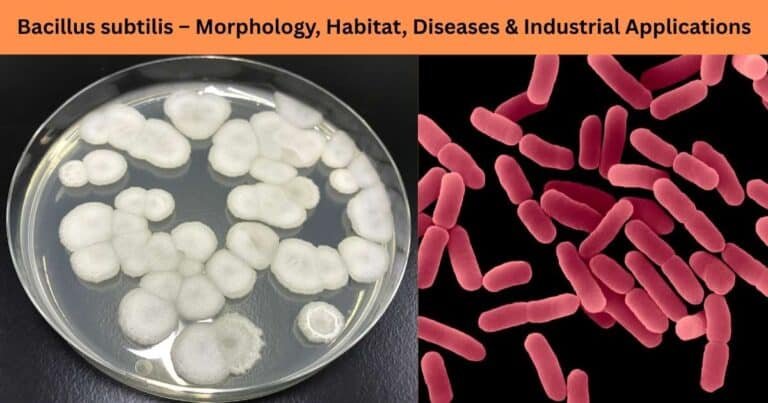
Bacillus subtilis– Morphology, Habitat, Diseases & Industrial Applications

Bacillus subtilis– Morphology, Habitat, Diseases & Industrial Applications

Introduction Bacillus subtilis is a Gram-positive, endospore-forming bacterium commonly found in soil, air, water, and decaying plant matter. This rod-shaped, motile microorganism is a facultative aerobe, meaning it can survive in both oxygen-rich and oxygen-poor environments. Known for producing resistant endospores, B. subtilis can endure extreme heat, dehydration, and UV radiation. Thanks to its well-studied

Scroll to Top